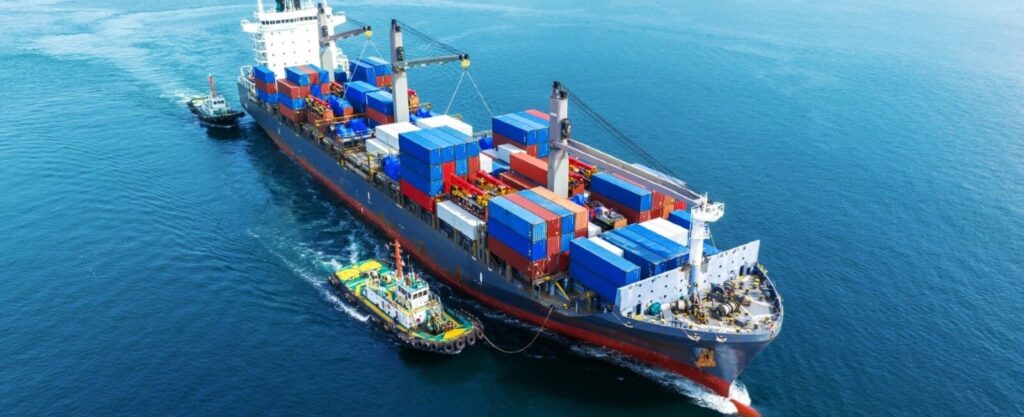
Ocean Freight, or Sea Freight, involves transporting large volumes of goods via cargo ships, typically using standardized containers. It is the most economical and common method for long-haul, non-urgent, and bulky shipments.

SERVICE DETAIL
| Service Type | Definition | Ideal For | Key Advantage |
| FCL (Full Container Load) | Your goods occupy an entire container (20ft or 40ft), sealed at the origin and opened only at the destination. | Shipments $>15-18$ CBM(Cubic Meters), or when maximum security and fastest transit time (by sea) are needed. | Most cost-effective per unit, faster transit, less handling, and high security. |
| LCL (Less than Container Load) | Your goods share container space with shipments from other importers. You pay only for the space (CBM) your cargo occupies. | Shipments $<15$ CBM or smaller loads that are not urgent. | Highly cost-effective for small volumes, providing flexibility without needing a full container. |
| Special Cargo | Transportation solutions for non-standard cargo. | Oversized, heavy, perishable, or temperature-sensitive goods. | Includes: Reefer (Refrigerated) Containers, Open-Top, Flat Rack containers, and Roll-on/Roll-off (Ro-Ro) for vehicles. |
| Benefit | Description |
| Cost-Effectiveness | Significantly cheaper than air freight, making it ideal for large-volume and bulk shipments to reduce the landed cost of goods. |
| Large Capacity | Cargo vessels can transport enormous quantities of goods (thousands of containers) at one time, accommodating virtually any size of shipment. |
| Sustainability | On a per-ton-mile basis, ocean freight is generally the most carbon-efficient mode of transport. |
| Versatility | Capable of handling a wide array of cargo types, from raw materials and consumer goods to heavy machinery and hazardous materials. |
Our comprehensive process ensures a smooth journey from supplier to your door:
Provide shipment details (volume, weight, origin, destination, Incoterm) to receive a competitive rate. Once accepted, a booking is placed with the shipping line.
Goods are picked up from your supplier’s factory/warehouse and transported to the designated Port of Loading (e.g., Shanghai, Shenzhen, Ningbo).
Documentation (Commercial Invoice, Packing List, etc.) is submitted to China Customs. Once cleared, the container is loaded onto the vessel.
The vessel sails to the African Port of Discharge (PoD).
Transit Time: Typically ranges from 25 to 40 days for major routes (e.g., China to Durban, Lagos, Mombasa, Tema).
The vessel arrives, and the container is unloaded at the destination port terminal.
Required documents (including Bill of Lading, ECTN/BESC/CNCA, Certificate of Origin, depending on the country) are submitted, and Duties/Taxes are paid to the local Customs Authority.
Once cleared, the cargo is transported by truck or rail from the port to your final delivery address (Door Delivery).
Major China-Africa Routes & Transit Times
| Origin Port (China) | Destination Port (Africa) | Typical Transit Time (Port-to-Port) | Primary Region Served |
| Shanghai / Shenzhen | Durban (South Africa) | $25 – 30$ Days | Southern Africa |
| Ningbo / Xiamen | Mombasa (Kenya) | $28 – 35$ Days | East Africa (including landlocked Uganda, Rwanda) |
| Shenzhen / Guangzhou | Lagos (Apapa/Tin Can)(Nigeria) | $30 – 38$ Days | West Africa |
| Qingdao / Tianjin | Tema (Ghana) | $30 – 36$ Days | West Africa |
Note: Transit times are estimates and subject to carrier schedules, port congestion, and weather conditions.

SERVICE DETAIL
| Service Type | Definition | Ideal For | Key Advantage |
| FCL (Full Container Load) | Your goods occupy an entire container (20ft or 40ft), sealed at the origin and opened only at the destination. | Shipments $>15-18$ CBM(Cubic Meters), or when maximum security and fastest transit time (by sea) are needed. | Most cost-effective per unit, faster transit, less handling, and high security. |
| LCL (Less than Container Load) | Your goods share container space with shipments from other importers. You pay only for the space (CBM) your cargo occupies. | Shipments $<15$ CBM or smaller loads that are not urgent. | Highly cost-effective for small volumes, providing flexibility without needing a full container. |
| Special Cargo | Transportation solutions for non-standard cargo. | Oversized, heavy, perishable, or temperature-sensitive goods. | Includes: Reefer (Refrigerated) Containers, Open-Top, Flat Rack containers, and Roll-on/Roll-off (Ro-Ro) for vehicles. |
Strict documentation is essential for smooth customs clearance at the African port. Key documents often include:
Bill of Lading (B/L): The contract between the shipper and the carrier.
Commercial Invoice & Packing List: Details of goods, value, and packaging.
Certificate of Origin (CoO): Proves where the goods were manufactured.
Mandatory Certificates (Country Specific):
ECTN / BESC / CNCA / FERI: Electronic Cargo Tracking Notes are required for many West and Central African nations (e.g., Nigeria, Ghana, Angola, Cameroon).
Product Compliance: Certificates like SONCAP (Nigeria) or PVOC/COC (Kenya, Tanzania) are mandatory to verify product quality and standards before shipment.
Import Permit/License: Required for certain restricted goods.
Ocean freight rates are highly dynamic and influenced by:
Market Volatility: Global supply/demand, fuel costs (Bunker Adjustment Factor – BAF), and currency fluctuations.
Cargo Characteristics: Volume, weight, and type (hazardous or special cargo incurs surcharges).
Local Charges: Terminal Handling Charges (THC) at both origin and destination ports, document fees, and security fees.
Destination Duties & Taxes: Assessed based on the product’s HS code and declared CIF value, determined by the destination country’s customs.